
Groombridge
Full heritage roof renovation to a listed church in Groombridge, East Sussex. New structural framework and reinforced beams installed within listed building consent. A temporary false ceiling kept the church fully operational throughout the build.
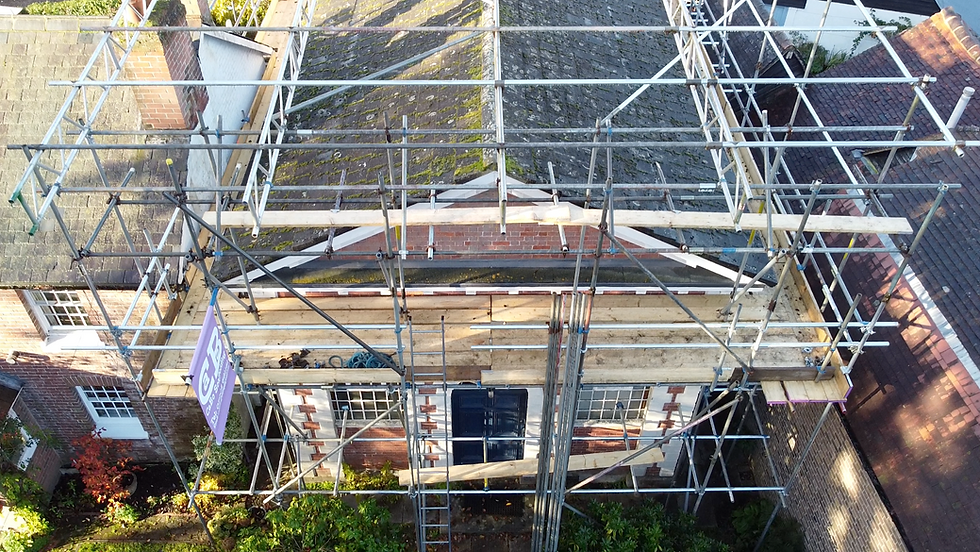
This project in Groombridge, East Sussex, involved the complete renovation of the roof of a listed church. It required close attention to the legal constraints governing what could and could not be replaced on a designated heritage building, and regular dialogue with the relevant conservation authority throughout.
The existing roof had deteriorated significantly. It had sunk, warped and become structurally compromised, posing a risk to the building and to those using it. A full replacement was the only viable solution.
Before any structural work began, a temporary false ceiling was installed internally. This allowed the church to remain in use throughout the construction period and also helped retain heat in the building once the new roof was complete. We recommend this approach wherever a place of worship needs to stay operational during major roof works.
The deteriorated roof structure was carefully removed and a completely new framework installed, including reinforced beams specified for the long-term structural integrity of the building. All works were carried out in compliance with the listed building consent in place. The finished roof has been built to last and represents a significant long-term investment in the future of this valued community building.


Can a listed church remain open while its roof is being replaced?
Yes, in many cases. On this Groombridge project we installed a temporary false ceiling at the start of works, which allowed the church to remain fully operational while the roof structure above was removed and rebuilt. This approach also contributed to heat retention once the new roof was completed. Keeping a place of worship open during major works requires careful planning, but it is entirely achievable with an experienced contractor.
What permissions are required to replace the roof of a listed church?
Listed Building Consent is required for any works that affect the character of a listed building, including a structural roof replacement. The application must demonstrate that the proposed materials and methods comply with Historic England guidance. The relevant diocese and the local planning authority's conservation officer will typically both be involved in the approval process. All consents must be in place before work starts.
What does replacing a listed church roof involve?
Yes, and this is one of the most common reasons clients commission an annex conversion. On this Upper Hartfield project the bathroom was designed with accessibility as the primary consideration from the start: level-access shower, generous turning space and correctly positioned grab rails. Planning the layout at the design stage is far simpler than adapting a finished bathroom later.
How do you ensure heritage roofing work meets conservation requirements?
We work closely with the local planning authority's conservation officer and, where required, with a heritage consultant or conservation architect from the earliest stages of the project. Materials, methods and details are agreed before work starts. Any variations are documented and approved in writing before being carried out. We do not deviate from the consented specification without written authorisation.
Do you carry out listed building roof work in Groombridge and the surrounding area?
Yes. Heath Construction carries out heritage and listed building roofing across East Sussex and into Kent, including Groombridge, Hartfield, Forest Row, East Grinstead and the wider High Weald area. Call Dave on 07503 987881 to discuss your project.